Exit Architect
I make sure builders have a choice — before circumstances make the choice for them.
I learned what happens when they don't.
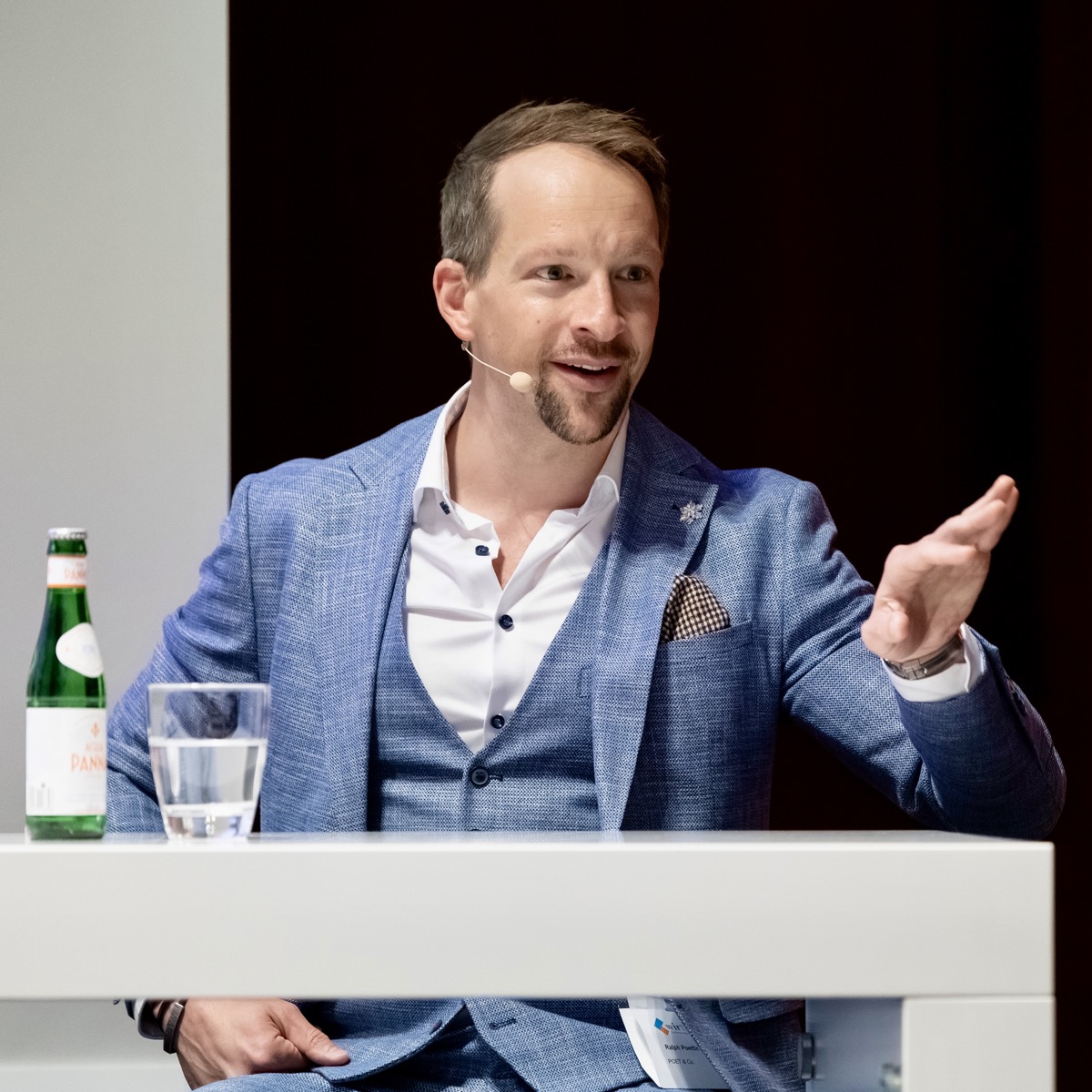
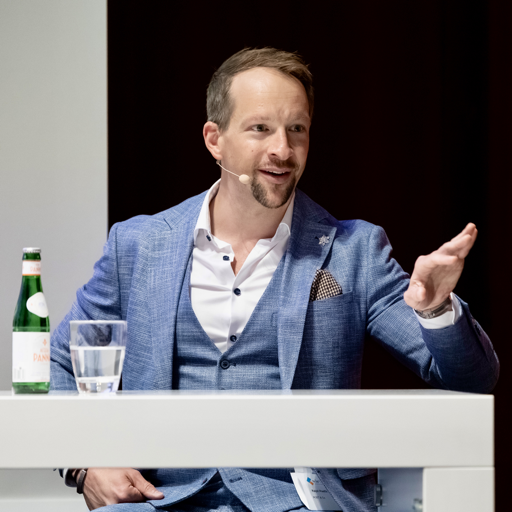
Ralph POET — formerly Ralph Pöttinger, under which name the transactions below are on record — is The Exit Architect. A former investment banker at William Blair in London and a licensed private equity portfolio manager, he advises founder-CEOs of fast-growing companies on systematically increasing Enterprise Value — years before any transaction. His framework, Exit Architecture, applies private equity value-creation methodology to founder-led businesses. He currently serves on the Supervisory Boards of AEROCOMPACT, IDEEMATEC and Mountain Lodges of Peru. His work with AEROCOMPACT included one of the largest founder-led exits in Austrian history.
Not promises. What happened.
€25m → €675m
He turned down the first offer. Three years later the same buyer bid twenty-seven times it.
AEROCOMPACT
0% tax
On a nine-figure exit. That was decided years before the sale.
AEROCOMPACT
47% → majority
An 82-year-old, outvoted in Peru, ends up controlling a group twice the size.
MOUNTAIN LODGES
85% → 90%
He came ready to give up equity for a new headquarters. He left owning more.
PGA GROUP
Father and son
Different perspectives across generations. Ralph is trusted by both.
IDEEMATEC
The story
He didn't execute his exit. His exit executed him.
My father built businesses.
He came from nothing, studied business and law, and went to work at a bank. He kept meeting the same problem: the best companies he saw didn't need more debt, they needed equity. So in the late 1990s, when institutional private equity barely existed in continental Europe, he started building it — inside a bank, of all places. It grew into a fund with banks, insurers, single family offices behind it.
I grew up inside those conversations. Entrepreneurs, financing, ownership, transactions. That was dinner. Nobody in my family treated entrepreneurship as remarkable; it was simply what ambitious people did.
Then he got older.
And one of the things he had built nearly destroyed him, because he had never prepared for the end of it. He wanted to pass it to me. By the time that moment arrived, there was almost nothing left to pass on.
Our whole family went through that.
He was one of the most capable investors I have ever worked with. He had spent three decades helping other people prepare for exactly the moment that eventually arrived for him, and he had done for everyone except himself the one thing that mattered most.
I learned what happens to a family when a builder loses the power to choose.
Here is what I took from it, and it is the single idea this entire business rests on: an exit is going to happen either way. Illness is an exit. Age is an exit. A market that moves on is an exit. Death is an exit. A sale is simply the version where you designed the terms yourself.
Not choosing an exit does not mean there won't be one.
The rest of the story
The path
What I took from it — and how I got here
I came to believe that when somebody spends decades building something valuable, we should not casually allow that value to disappear because circumstances changed.
Not only for the founder's sake. A company is knowledge.
Read the full story Show less
A company has figured something out. How to make a material lighter. How to move something more efficiently. How to cure a disease. How to organise people. How to manufacture at lower cost. How to solve some small irritation nobody else bothered solving. Even a thoroughly ordinary mid-sized business contains knowledge: customer relationships, processes, craftsmanship, reputation, trained people, solutions to thousands of little problems.
And as long as people voluntarily keep paying for it, it is producing something somebody values.
So when a viable business disappears unnecessarily, more than shareholder wealth disappears with it. A small piece of civilisation's accumulated problem-solving capacity disappears.
I have children. That changed the timescale I think on.
I want them to inherit the richest civilisation we know how to give them. More knowledge, more businesses, more products, more possibilities than we had. And I want their children to inherit more still. I am not only trying to leave them capital. I want civilisation itself to be their launchpad.
So when I meet someone who has spent years or decades building something valuable, I want it to survive. I want it to grow. I want the builder to prosper from it.
And I want him to have a choice before circumstances make the choice for him.
I know what happens when he doesn't.
How I got here
I left home at fourteen.
Not out of unhappiness — I was doing fine. I simply had the persistent sense that the world was larger than my hometown in the Austrian countryside and I wanted to go and check. I ended up at a high school in rural Ontario, living with a host family and three host brothers, surrounded by farmland. The curriculum was easy. The education was not: it was my first real lesson in how differently a society can organise itself.
I never moved back. After Canada I went to Vienna instead of home, to a school that selected students by cognitive testing rather than by grades or money. It was the first place where nearly everyone around me was as curious as I was. That year taught me something I have relied on ever since: the quality of your environment sets the ceiling on the quality of your thinking. If you don't like the ceiling, change the room.
Then I kept changing rooms on purpose.
A year in Paris, working at one of Europe's most significant centres of Jewish culture as part of Austria's Holocaust remembrance service. Studies of economics in Vienna, and law alongside it — because I had already noticed that the decisions that matter happen where business, finance and law intersect, and almost nobody is fluent in all three.
An exchange semester in Buenos Aires, chosen deliberately over Spain because I wanted somewhere genuinely unlike Europe. I arrived just as Argentina entered another sovereign debt crisis, and learned more about currencies, incentives and monetary systems in six months of daily life than any lecture could have taught me. I also compressed every class into a single day of the week, which left six days to visit the rest of the continent. That was my first experience of a principle I now sell: architecture creates options.
Five winters as a ski instructor in Lech/Arlberg during university. Austria's instructor training is among the most demanding in the world, and Lech attracts a clientele of entrepreneurs, investors, artists and prominent families from everywhere. I learned to teach, and to build trust with a stranger inside an hour. Mostly I learned something that has been more useful than any technical skill since: expertise rarely wins the client. Trust does.
Then London. Investment banking at William Blair, mid-market M&A. Eighty-hour weeks, deadlines that moved overnight, work that had to be flawless. It compressed years of learning into a very short time and taught me how elite organisations behave under sustained pressure. It also revealed something I had not expected: transactions live or die on legal architecture as much as financial architecture — and very few bankers understand both.
So I went to Singapore for an LL.M. in international business law, delivered across Singapore and Shanghai, to learn the common-law system underlying most of global commerce. Singapore itself taught me as much as the degree did: a country that was deliberately designed rather than inherited.
I graduated in the summer of the Brexit referendum. London stopped hiring. So instead of returning to advise on transactions, I became a professional investor — and shortly afterwards one of the youngest people in Austria approved by the financial market authority as a licensed portfolio manager for private equity and venture capital funds.
That changed how I see companies entirely. Investment banking taught me how transactions happen. Private equity taught me what happens in the years before one becomes possible — governance, capital allocation, holding structures, incentives, board work, the slow accumulation of hundreds of architectural decisions that eventually show up as a single number.
Then, in 2019, I met a founder called Mathias Muther. What began as a supervisory board seat became five years of building, and the proving ground where everything I now do was tested.
I have travelled to roughly a hundred countries. Not really as a tourist. I want to know how places work.
What I actually do differently
I have sat on both sides of the table.
Sell-side in London, buy-side as a licensed portfolio manager.
You get someone who knows how a buyer will think about your company before the buyer does.
I bring the one perspective you cannot buy.
You know what your company can do. You do not know what a strategic buyer, a financial investor and your bank each see when they look at it — or what each of them quietly discounts.
You find that out well in advance, rather than in a data room, when it is too late to change.
Finance and law. Not finance or law.
Business, economics and law across two legal systems on three continents, a Master’s degree from a global top-10 university.
Deals are contracts as much as they are economic exchanges.
I don't deliver a deck. I join the board.
After the strategy comes implementation — as a board-level advisor, over years.
You don't get a recommendation you then have to execute alone.
I work the ownership level and the operating level.
From the CEO downwards into the organisation, and simultaneously with the owner, the family, the heirs and whomever else in that room.
Most of your real problems live between those two levels. You need someone working on both.
My objective is identical to yours.
Auditors, interim managers and M&A advisors all pursue legitimate goals — but they are operational goals. Mine is Exit Value, which is an owner's ultimate goal.
For the first time, someone at the table is measured by the same thing you are.
I coordinate everyone else.
Banks, law firms, tax advisors, auditors, insurers — all of them are suppliers in this work.
You stop being the conductor of eight service providers who have never met.
There is no standard process, and that is the point.
A doctor who prescribes the same four steps to every patient regardless of age, weight or diagnosis is not being serious.
The decisive moves always come out of your specifics — which is why people who hear what we did for an 82-year-old shareholder in Peru tend to use the word "creative."
Facts
The short version
Role
The Exit Architect. Board-level advisor to founder-led companies.
Licensed
Portfolio manager for private equity and venture capital funds, Austrian Financial Market Authority
Board Memberships
AEROCOMPACT · IDEEMATEC · Mountain Lodges of Peru (current)
Previously
Investment Banking, William Blair, London — mid-market M&A · Portfolio Manager, institutional evergreen private equity fund
Education
Business, Economics, Law · Vienna, Universidad de Buenos Aires, East China University of Political Science and Law (Shanghai), National University of Singapore (Master’s)
Languages
German, English, French, Spanish
Based
Austria. Working across Europe, Asia and the Americas.
Countries visited
~100
Born
1990, Bregenz, Austria
Selected press and speaking
WIR Magazin, January 2026
"With investment banker Ralph Pöttinger, Mathias Muther found a fitting partner … together they trimmed the company onto an exit course."
LGT, Vienna 2024
Panel on single family offices
29 October 2026
Panel on 'Founding, Building, Selling — Architecting an Exit' at the invite-only Single Family Office Alliance event
I cannot know what the future holds. Neither can any founder. But we can build so that when circumstances change, we still have choices.
That is why I believe every business builder needs the power to choose.
 Take the Investor Readiness Assessment — 4 minutes